

Read Time
3 mins
Main Content Focus
Task FlowForm Design
My Roles
I was the only UX designer for this project, responsible for the launch of native apps and web apps for two new New Jersey brands within 9 months — from registration to the Logout button, all built from scratch.
The Ambitious Plan
That was a hectic project — the business goal was ambitious and the deadline was fixed. We needed to make sure we'd be among the first to claim market share in the new market of New Jersey. The business goal was to launch two native apps and two web apps in 9 months, starting from zero. What's more, there was the time difference between London and New Jersey to contend with.
That wasn't mission impossible — at least we managed to get it done. But we weren't particularly proud of the tech debt and the waterfall process. In hindsight, I would handle it rather differently.
Legal Requirements
But on the positive side, it was a valuable lesson, as I got the chance to deal with complicated legal compliance requirements. And surprisingly, I quite enjoyed doing that.
At that time, New Jersey regulators decided to reopen the gambling market. They were doing everything to ensure responsible gaming and no money laundering. On top of that, we had to make sure players could only play on our site when they were physically in New Jersey. At that time, dual-factor authentication and geolocation weren’t widely used — they were almost alien technologies. I had to understand the technical logic and limitations quickly, and I had a day to draft four charts like the ones below:
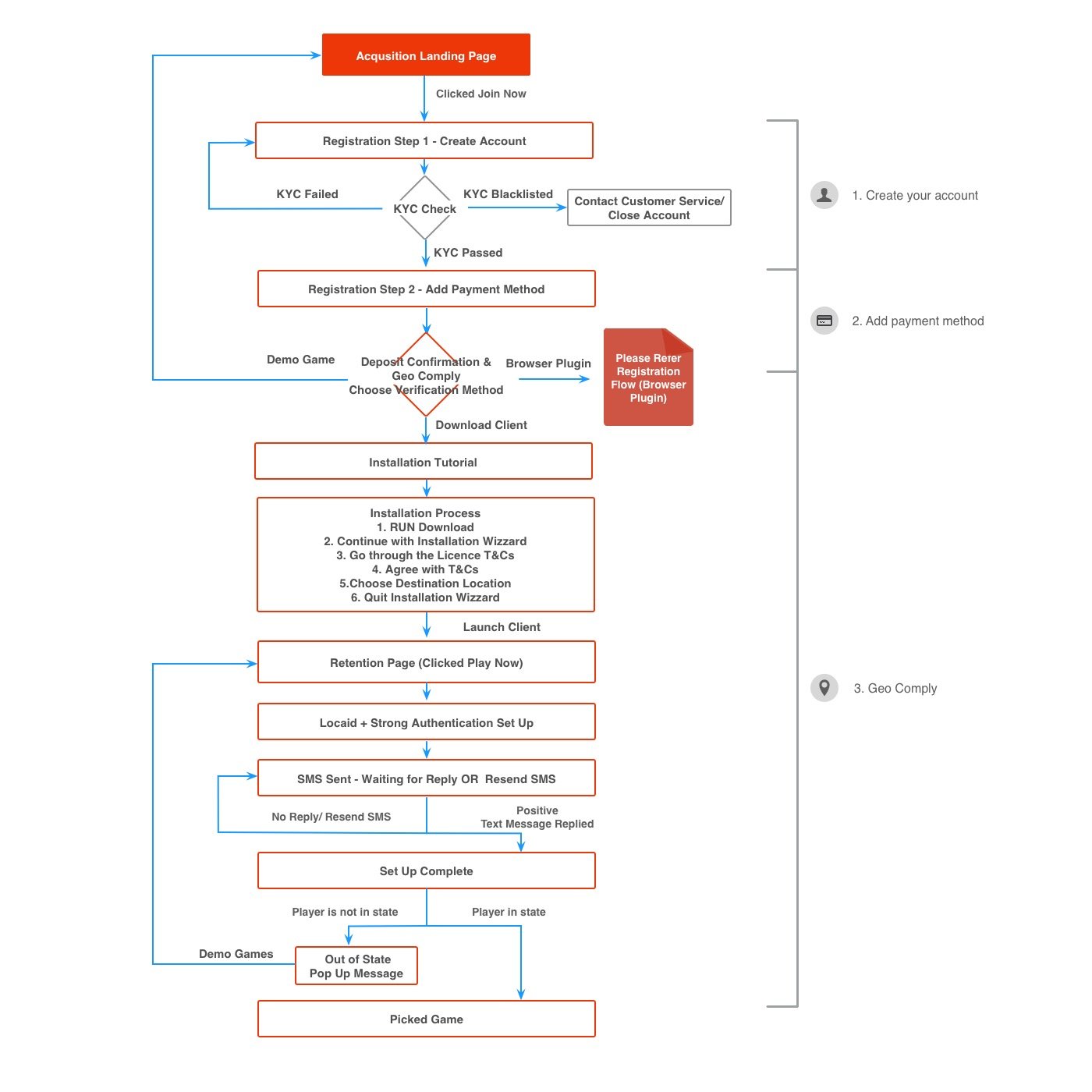
There are a lot of details behind a registration form. Making everything clear will help the developers to get things done promptly and accurately.
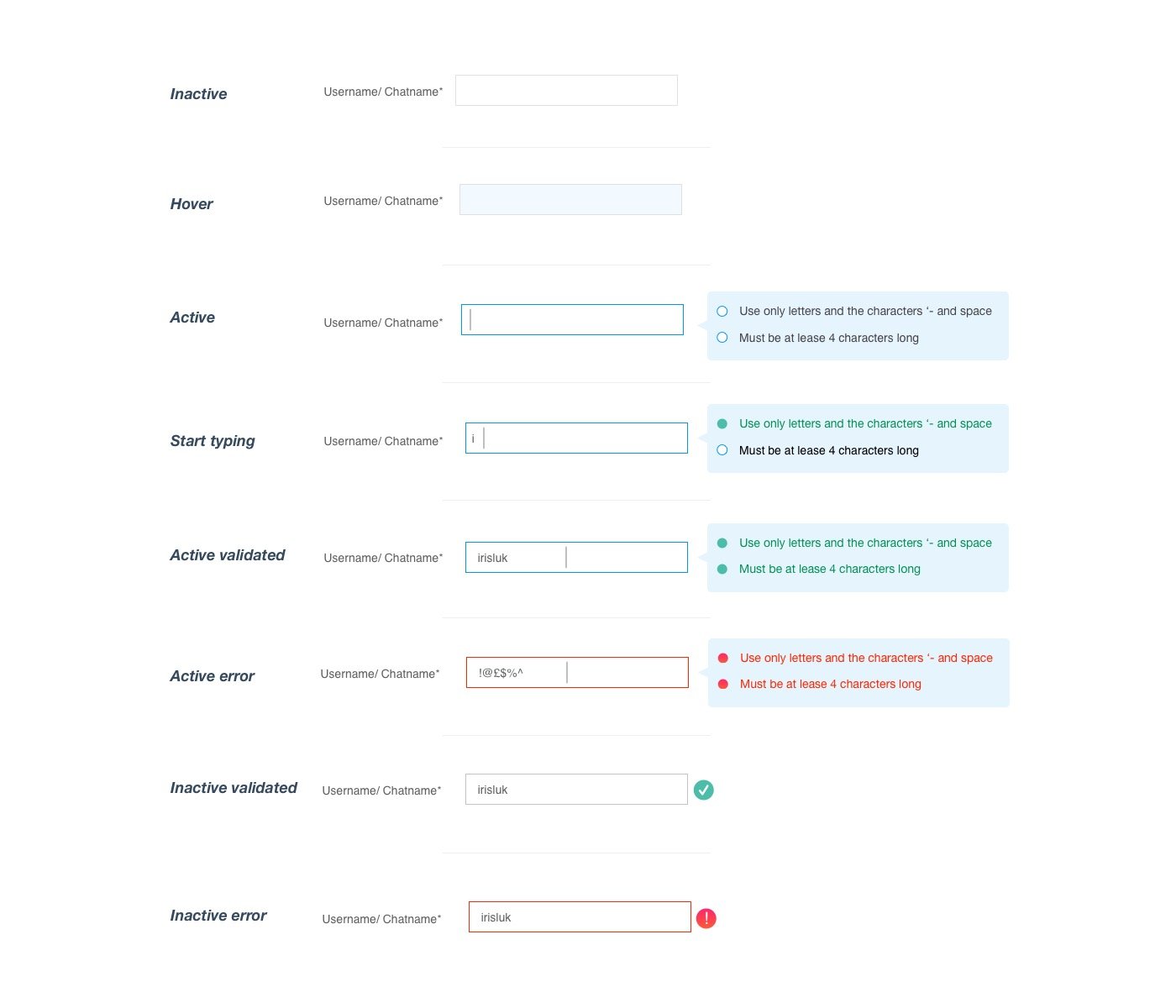
If I could redo things...
The above was done with my hands tied by the time limitation. There was so much more I would have done differently regarding registration:
1.I would have tried to break the registration down into pages so users would feel less overwhelmed. Studies have shown that stepped registration improves conversion rates as well. 2.I would have simplified the form by taking out the marketing-related questions — that information could be acquired at later stages. 3.I would have localised the registration forms, as user behaviours and mental models are quite different. I should have tested with actual users if possible.